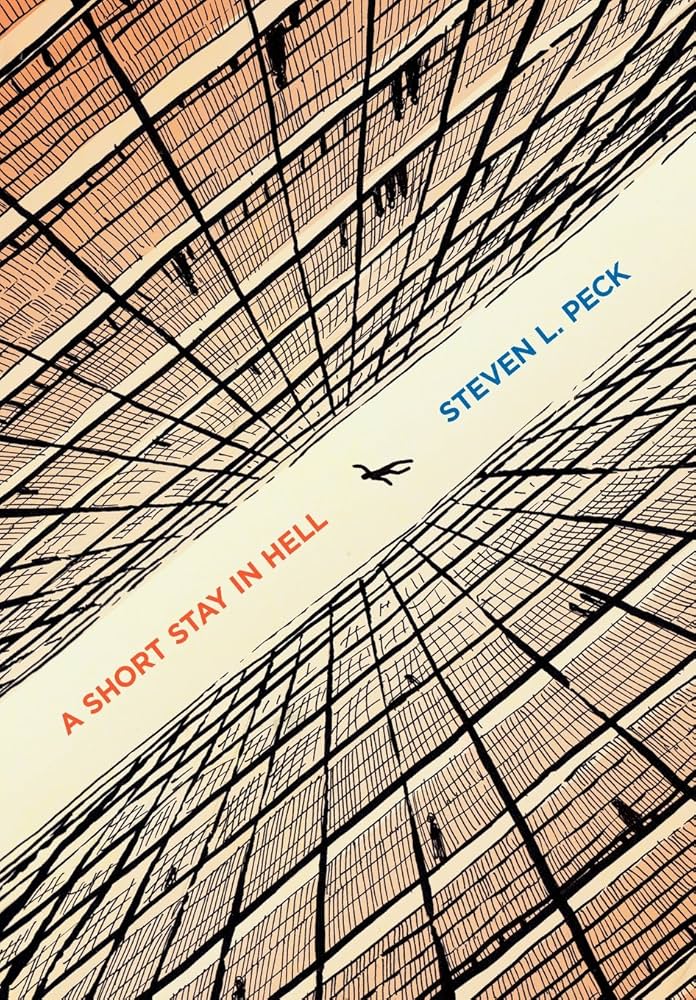
PREMISE: A guy dies and finds himself in Hell. That’s all you’re getting.
I flew through this. And not just because it’s only just over 100 pages long. It’s fantastic and addictively written and definitely makes you think. Not about Hell; personally I’m fairly convinced Hell doesn’t exist and if it does (and therefore Heaven also) then man, did I back the wrong Horse of Life. I’ve got no beef with people who do think they both exist, however. In fact, if Hell is actually waiting for me then I’ll be pretty happy if it’s an infinitely huge library. Even if it does mean I spend eternity looking for American Tabloid.
I’m not dipping into Goodreads for this one but fair to say I’ve had a look and there’s the usual handful of bellends and, staggeringly, a bunch of people who didn’t even finish this. It’s 100 pages! How fucking lazy are some people?
In case you haven’t realised, I’m not an academic book reader / reviewer. I don’t notice if a book is using a particular kind of technique or is espousing some deep shit philosophy or even whether the author’s intention is to make some sort of statement or comment on something. If it’s a well-written book with a good premise and story and – crucially – it entertains me or moves me or makes me think then that’s exactly what I’m looking for in a book. Just like this one.
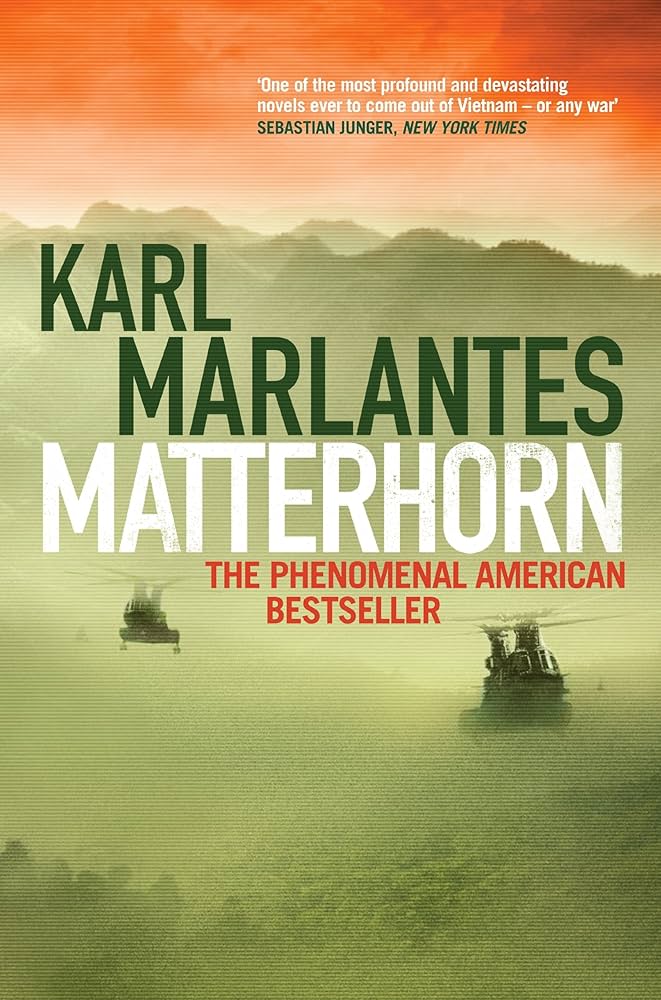
PREMISE: Following a soldier during his time in the Vietnam war.
Yeaaaaaah…I kept that premise short and sweet so we can get to the juicy stuff. Before we visit Goodreads Island, where twats, bellends and utter nob-jockeys live in sweet harmony, let me start by saying this book is amazing. I first read it a fair few years ago and it’s just as good the second time around. Nothing explains what it’s like to be a soldier – and in this case, in a completely pointless and fucked up war – like this. It’s written as a fictional story but it’s essentially true. It’s long and detailed and all-encompassing and addictive and unlike any other book involving conflict that I’ve ever read. Cannot recommend it enough.
And I cannot recommend enough having a browse of the Goodreads 1-starrers for this baby. They really are on another level. And, perhaps more so than any other book I’ve ‘researched’ (hehehe…I laughed at that term too) it exemplifies why the 1-star ratings are absolute horseshit.
As at writing, there are 976 1-star reviews of Matterhorn. Of the first 45 that appeared on my screen, 21 admitted to not having even finished it. Using a complex system of mathematical extrapolation, I make this almost 50% of reviewers who rated this book 1 out of 5 haven’t even finished it. What is the point of them leaving a ‘so-called’ review? It’s not a review as they’ve ultimately nothing to review…because they haven’t read it. Similarly, how can they give a rating to something they haven’t finished? That’s like me baking a cake and someone rating me on how good it is while I’m still in the mixing stage. For some reason that I can’t fathom, it annoys the shit out of me.
And at the same time, I’m glad they choose to write something as I get to ridicule them here. If they’re at liberty to write shit about a book they haven’t even had the decency to finish reading then I’m at liberty to take the piss and call them names. Just like adults should.
I’m starting with the (frankly unbelievable) ‘review’ by Rebecca Curtis, where she admits “I did not actually read this”. Yep, you read that right. WTF? She writes a couple of lines and gives a 1-star rating to a book that she hasn’t even read. RC, you are a moron. Several people commented that they either hate war (who doesn’t?) or hate war books. Or both. Which begs the question, why are they even contemplating reading this then? Sado-masochists of the world unite. Surely they’ll have more fun just flogging themselves or running their genitals over a cheese grater? A couple of people commented on the bad language, like that is the worst thing that Marlantes could have included. Forget the violence, genocide, brutality, utter devastation and the lasting effects that this war – any war, really – has on people…the language that was involved was just too much. It’s okay for soldiers to shoot each other in the face, but absolutely unacceptable to accompany that with a swear word. “Take that, you brute”…”Oooh, you nasty rotter, you shot me in the goolies”…”Excuse me, my good man, why are you hacking my arm off with a machete?”. All of these would have been much more acceptable and, dare I say it, realistic? Come on Marlantes, what the fuck is wrong with you and your potty mouth?
One of my favourites comes from Marco3x (3 times as big a bellend): “This is garbage. The author has watched too many war movies”. Karl Marlantes is a Vietnam veteran. He was there. As opposed to Marco3x, who, judging by his picture, wasn’t. Another was from Mark, who read between 1/3 and 1/2 (two fifths would have worked there Mark) and then “found out it was just going to be another “wow, this war in Vietnam really sucks” book and returned it”. He’s got a point; where are all the positive books that don’t focus on the death and violence but talk about how well the helicopters performed? Or how much money was made by people who had shares in bullet-making companies? Or how many annoying weeds were destroyed by napalm?
Weirdly, the one that has me scratching my head (and simultaneously pulling my hair out) the most is this doozy by Heather Doherty: “I couldn’t read it. War sucks”. I may be wrong on this, but I don’t think Karl Marlantes is to blame for the Vietnam war. And Heather dear, what you’re actually rating with your 1 star is war itself, not this novel. And if this is the case, why are you even giving war 1 star? Surely every war is a no-star affair? And you didn’t even read it. So, what you’ve done is saddled Marlantes with a 1-star rating for a book you didn’t even read because (and rightly so) you think war sucks. How is this the author’s fault? And have you done this for every other fictional war book out there? It seems only fair.
So, once again I’m back to my contradictive point; you shouldn’t be allowed to rate a book you haven’t finished (and certainly not one you haven’t even read!). However, I’m glad that it is allowed, as it gives me blog fodder. Which I shall now refer to as ‘blodder’ and copyright for monetary purposes.
PREMISE: I admit, I generally copy this premise shit from Goodreads. No point me reinventing the wheel. I also do that because it’s a professional summary of the book and something that I wouldn’t be able to get anywhere near in terms of quality. However, I realise that’s such a cop out and in my attempt to produce a professional blog of all my own shite writing and perspectives, I’ve decided to do it all myself. Which basically means if you have even a passing interest in the book I’m talking about, go to Goodreads for a better summary of it because I’ll have likely fucked it up.
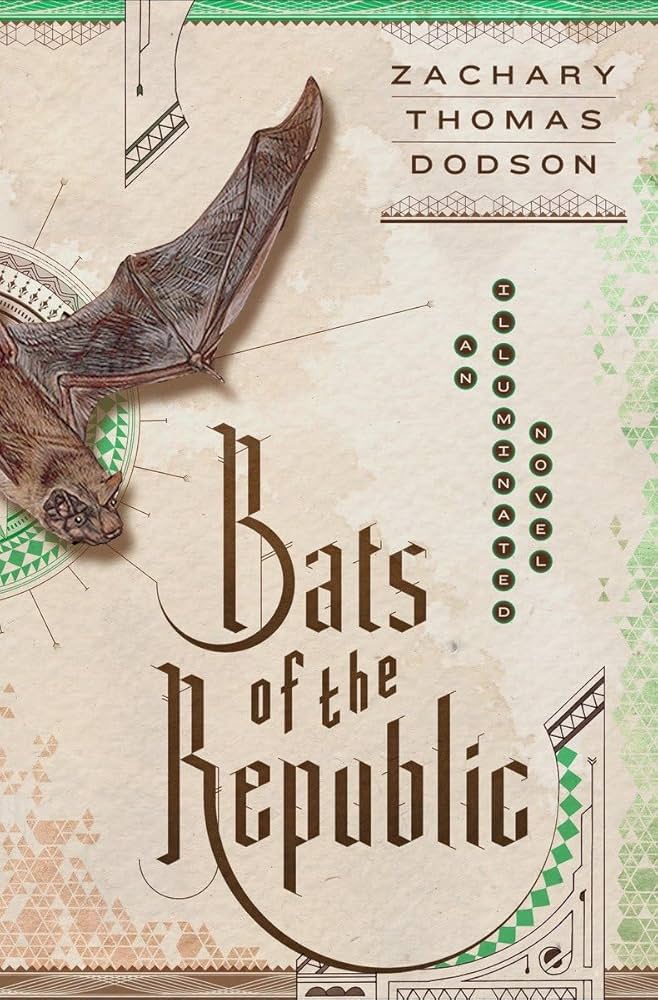
So, this book; two related, converging stories set a few hundred years apart, told using a stunningly clever and gorgeous variety of media (text, pictures, drawings, maps etc.).
I have a dream. That one day my one little daughter will walk into Waterstones or Foyles or Barnes & Noble and not see a Romantasy section full of similar-looking novels with beautifully designed covers and gloriously curly fonts but rather a shelf with the title ‘Original Novels’ and under which sits copies of this book and S and House Of Leaves and Maxwell’s Demon and XX and hopefully a raft of other novels that have some originality about them.
To quote the kids of today, this kind of book is my jam. Particularly when it’s done as well as this. That’s the thing with books like this; there’s so much thought gone into the story, the design, the individual elements to be added, how it all hangs together etc. It becomes a real experience to read. It won’t be for everyone. One man’s Donald Duck is another man’s Donald Trump (aside from the fact that one is a laughably fucking idiotic clown of a cartoon character and the other is a duck).
In fact, this book is everything Trump isn’t; it’s intelligent, eloquent, thoughtful, interesting, fantastic to look at and something that adds to society that we can be grateful for.
PREMISE: Two kids steal two horses from the town’s local asshole and he and his equally assholey sons go after them.
That’s it. That’s all I’m putting. Well, that probably won’t be true by the time I’ve finished writing this bit. I never plan that far ahead. In fact this very sentence I’m writing now I had no idea at all five minutes ago that I’d be writing it. Although I guess I’ve just summed up the very action of writing. I wonder if Mark Z. Danielewski (MZD from now on) writes that way or whether he knows exactly what each line, sentence and paragraph is going to say. Because man, can he write. And this novel is 1200 pages long and – perhaps strangely for MZD, based on his previous books – aside from one page, this is all solid, full-page writing, so he’s written a lot.
More than any other book I’ve written about on this blog, this is the most difficult to fully elucidate why I recommend it, without spoilers. And without contradicting myself at every turn. Because it’s fair to say that this won’t be for everyone. It’s painfully slow paced, but in a good way. Like the pain you get when you’re having a tattoo done. Oddly addictive. It’s self-indulgent in places but so intelligently well-written that that self-indulgence is so enjoyable. It’s frustrating in a few places too when the story goes off on a tangent that changes the pace somewhat, but you end up just being excited as to where it’s now going. This is a story that most writers would have told in 200 pages. Or 400 pages with a bit of padding. Or 600 pages with a shed load of backstories, plus extra padding. Or 800 pages with a shed load of backstories, extra padding plus a couple hundred pages of inane rambling. Or 1000 pages with all of the above plus pictures every 4 pages. That MZD has told this story over 1200 pages and yet still made it so unbelievably readable is some sort of miracle.
You know what I think this book is? It’s a book that contains a story which you read because you love writing. Or the form of writing, the art involved, the actual act and skill of creating a story, a novel and a book. There’s essentially nothing unique or different about the story itself; it’s all about how the story is told and how, as a reader, you approach and enjoy how it is being told. That’s the bit that I recommend.
In my usual way, I’m going to finish by referencing a Goodreads review – just the one as it’s pretty breathtaking in it’s level of utter dumbfuckery. It’s posted by Roy, who hasn’t included a picture of himself as it’s more than likely he’s got multiple facial features more than the rest of us as a result of decades of familial inbreeding. Here’s a couple of lines from the Royster:
“Every female character is intelligent and flawless, with most of them insufferable with their attitudes towards the male characters, who are all eventually portrayed as pathetic, cowardly and/or terrible father figures. It’s nauseating to see in modern media that the only way female characters can be strong is by putting down and insulting white male characters. The only male character that doesn’t suffer from this is the effeminately written character of Kalin.”
Yep, Roy’s gone the misogynistic, racist route. And incorrect as well. Every female character is not flawless (did you even read the scenes with Allison and Sondra? I’m assuming not as you got one of their names wrong) and quite how you’ve read MZD’s portrayal of Kalin as effeminate I’ve no idea. I’d like to see you do what Kalin did in this story. Still, I’m too mature than to poke fun at a stranger this way so I’ll just finish by saying that Roy is clearly an old white guy with a small willy.
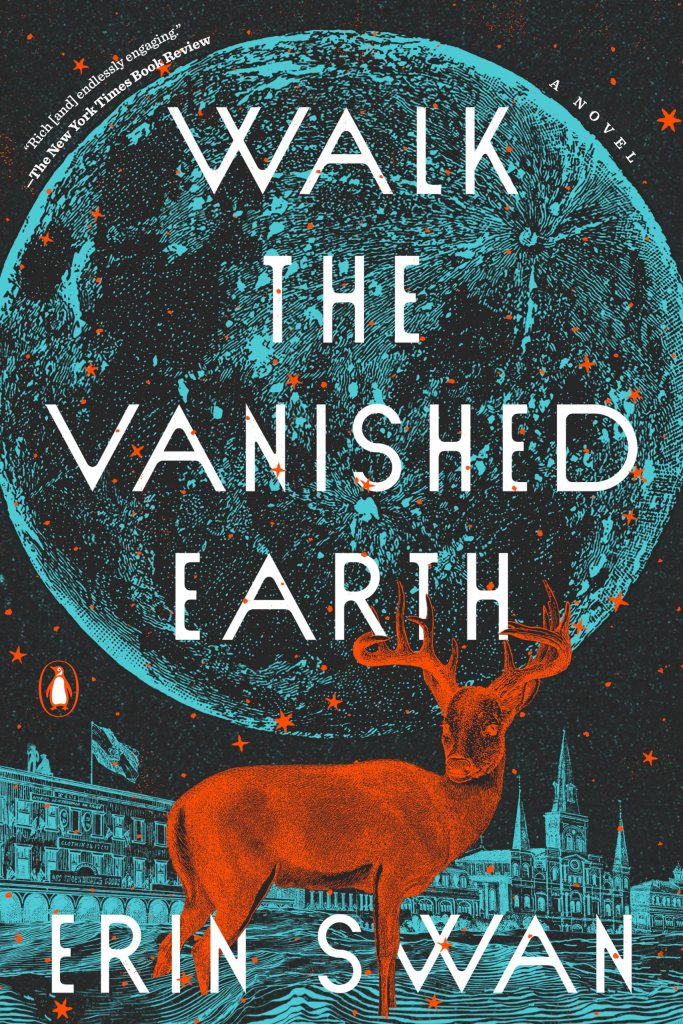
PREMISE: The year is 1873, and a bison hunter named Samson travels the Kansas plains, full of hope for his new country. The year is 1975, and an adolescent girl named Bea walks those very same plains; pregnant, mute, and raised in extreme seclusion, she lands in an institution, where a well-meaning psychiatrist struggles to decipher the pictures she draws of her past. The year is 2027 and, after a series of devastating storms, a tenacious engineer named Paul has left behind his banal suburban existence to build a floating city above the drowned streets that were once New Orleans. There with his poet daughter he rules over a society of dreamers and vagabonds who salvage vintage dresses, ferment rotgut wine out of fruit, paint murals on the ceiling of the Superdome, and try to write the story of their existence. The year is 2073, and Moon has heard only stories of the blue planet–Earth, as they once called it, now succumbed entirely to water. Now that Moon has come of age, she could become a mother if she wanted to-if only she understood what a mother is. Alone on Mars with her two alien uncles, she must decide whether to continue her family line and repopulate humanity on a new planet.
I absolutely loved this book. So much so, that it’s made it into my Hall of Fame. But before I get to why and spurt a load of superlatives to back it up, let’s hold hands and have a quick skip through the Goodreads 1-starrers’ garden. Some corkers for this one:
Torza couldn’t be arsed to finish the book but wanted to add a one-star review anyway, and said, “didnt finish it. idk, maybe it was good, but the multiple child pregnancies was kinda putting me off.” There was one and it was fairly important to the plot. Colleen Carroll (4 lots of double letters in that name…lazy-ass parents…there’s plenty of other letters out there) continued with the ‘let’s make up some bullshit about this book’ by referencing the “obvious/probable forced alien impregnation of a 14 year old”, which didn’t happen. At all. Anywhere in the book. Two reviewers mentioned the term ‘TERF’, suggesting that the author, Erin Swan has an issue with transgender people. Where the fuck they got this from I’ve no idea as there are no transgender characters in the book. Unless that was their problem, in which case they can fuck right off. Why does every author who doesn’t include a trans character get accused of being anti-transgender? For fuck sake.
My favourite review, however, was this baby by Coastalshelf (obviously has an even more embarrassing name than my middle one): “Found the focus on women as vessels for childbirth extremely off-putting”. Ho-lee-shit. This is a book that spreads across centuries and features characters that are related to each other. The only way for that to happen is for women to give birth. That’s not my opinion, that’s just a fact. You know, Coastalshelf, like your mother did to bring you into the world. Women ARE vessels for childbirth, thankfully. Otherwise none of us would be here. Coastalshelf, you’re a fucking moron.
This book is staggeringly good. Absolutely beautifully written, a complex, inter-weaving story with a gargantuan scope. And this is the author’s first book. Mind-blowing…
PREMISE: A girl named Rose is riding her new bike near home in Deadwood, South Dakota, when she falls through the earth. She wakes up at the bottom of a square-shaped hole, its walls glowing with intricate carvings. But the firemen who come to save her peer down upon something even stranger: a little girl in the palm of a giant metal hand.
I absolutely flew through this book and love the way the story is told via interviews and reports and the odd journal entry. It’s written in a really addictive way and, having now checked it out further, has two sequels which I will doubtless bag at some point. It feels like the literary version of a Transformers film; it’s probably not going to win the Nobel or Booker prizes and probably not even the Arthur C. Clarke award, but…it’s fantastically entertaining, intriguing, has a great premise and takes it in a good direction and is just a fun read. And, like watching a Hollywood summer blockbuster, sometimes that’s all you need.
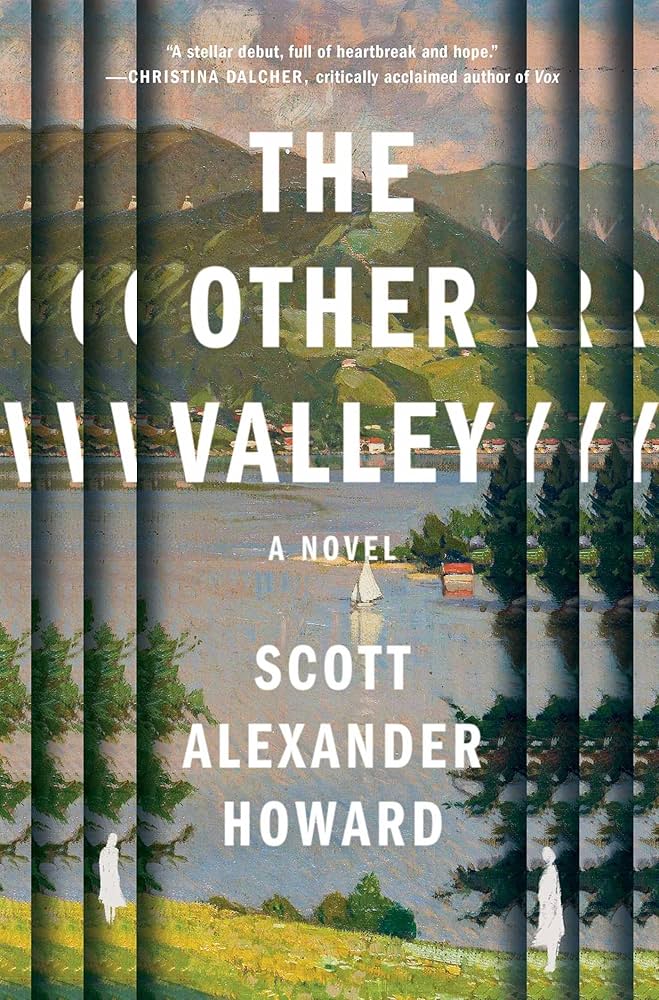
PREMISE: Sixteen-year-old Odile is an awkward, quiet girl vying for a coveted seat on the Conseil. If she earns the position, she’ll decide who may cross her town’s heavily guarded borders. On the other side, it’s the same valley, the same town–except to the east, the town is twenty years ahead in time. To the west, it’s twenty years behind. The towns repeat in an endless sequence across the wilderness.
When Odile recognizes two visitors she wasn’t supposed to see, she realizes that the parents of her friend Edme have been escorted across the border from the future, on a mourning tour, to view their son while he’s still alive in Odile’s present. Edme –– who is brilliant, funny, and the only person to truly see Odile –– is about to die. Sworn to secrecy in order to preserve the timeline, Odile now becomes the Conseil’s top candidate, yet she finds herself drawing closer to the doomed boy, imperiling her entire future..
Yesss. Re-read that first paragraph above – a town that repeats across endless valleys in 20-year gaps. What’s not to like about that idea? Books like this hit my g-spot. If you Google it, someone somewhere will call this type of novel ‘speculative fiction’, although I’m pretty sure the definition of ‘fiction’ is that it’s speculative, otherwise it would be fact. But I get the pigeon-holing and actually I’m grateful for it as it allows me to Google ‘speculative fiction’ and discover books like this. What’s even better about this one is that there’s a really beautiful story being told within the construct of the valleys and the time difference. A great book to get lost in.
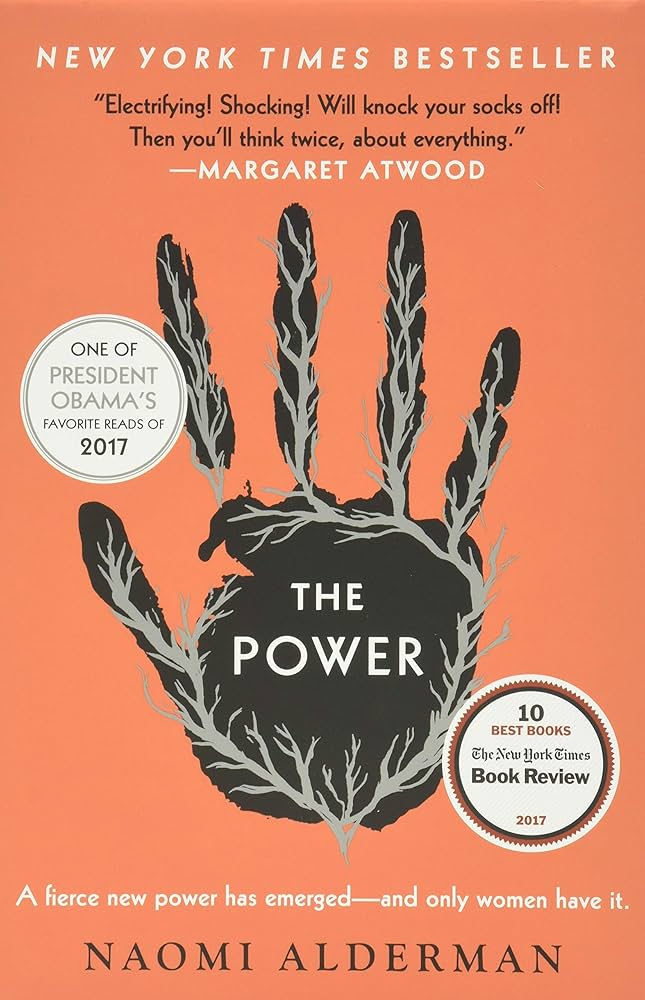
PREMISE: Women develop the ability to release electrical jolts from their fingers, which allows them to become the dominant sex.
Aaaaah. Why do I do this to myself? I knew what Goodreads would be like on this one and yet in I dove anyway, just to see how much I would drown myself in it. And yet, I’m starting to feel that my forays into the Goodreads 1-starrers are actually benefitting me and giving me this unique take on humanity and it’s gargantuan propensity for difference.
Hahaha…just joking…I do it so I can find the nutjobs on there. However, the sheer hatred that some people have towards books (and there’s a shitload who clearly don’t like this one) has made me start wondering whether I’m actually investing the right amount of emotion and energy into each book I read. And, perhaps more importantly, whether I’m taking them seriously enough.
I’ll be honest, when I read a fiction book I tend to not believe it’s true. Because it’s fiction. And, conversely, when I read a nonfiction book I usually err on the side of believing what is written under the assumption that the author has researched the book and, in general, you’re not supposed to lie in nonfiction. But man, some people take fiction as if it’s the actual gospel (an ironic sentence, I know) and then delight in spewing hatred towards what is ultimately a made up story. I genuinely fear for the health of some of these people if they are able to conjure that much anger and hatred towards a make believe tale. And what’s worse is that they nearly all have additional anger at how they personally have interpreted the book.
It’s just a book. It’s just a made up story. Calm the fuck down.
A few Goodreads reviewers have lambasted the book for not covering/including transgender characters. So what? Don’t take it personally, the author just didn’t write about them. I’m curious as to why Tolkein didn’t include a single unicorn in Lord Of The Rings but I’m not going to lose my shit over it.
I guess ultimately I just enjoy reading. I have books that I like more than others and a few books I haven’t got on with but rather than dwelling on these I just move on to the next. There’s so many out there, why waste time with all that negativity when you could be spending that time reading your next favourite book?
The Power – an interesting idea, very violent in places, definitely thought-provoking and ultimately a really enjoyable and entertaining book. What more do you want?
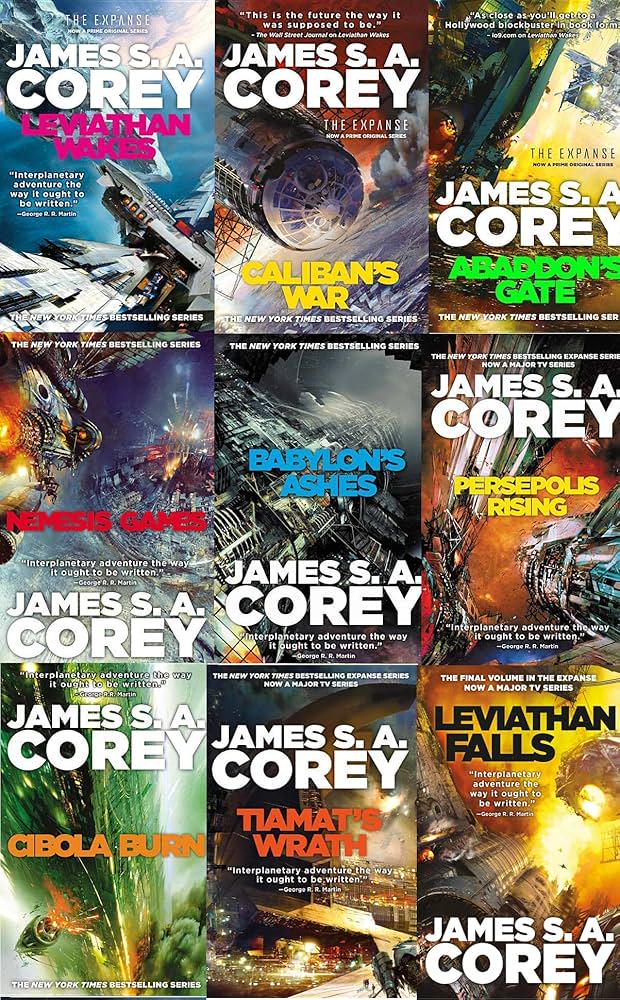
PREMISE: The Expanse primarily tells the story of the crew of the gunship Rocinante over more than four decades as they navigate criminal plots, solar-galactic politics, wars, and an alien mystery. The book series is made up of nine novels and nine novellas.
Man, I love sci-fi. And yet, relatively speaking, I hardly read any at all. It’s a strange paradox which could easily be dramatised in a sci-fi book or film. The Sci-fi Paradox, it shall be called. One man, alone in the blogging universe with only a handful of readers to hear him, wants to read more sci-fi books but never does, and he just can’t figure out why. It’s got instant bestseller written all over it.
I’ve read some Peter Hamilton and quite a few Iain M Banks and a few other sci-fi books here and there but nothing has comes close to The Expanse books for me. They are pitched absolutely perfectly in terms of story and characters and then all the spacey tech stuff to keep the geeks happy. The good guys and gals are all so likeable, the bad ones absolute bellends. There’s alieny creatures and gore, fast spaceships with big guns, interesting and colourful and dangerous worlds and mind-blowing extraterrestrial entities. These books literally have everything and – most importantly – have a cracking story that runs through all 9 books and within the novellas and finishes just as good as it started.
PREMISE: Orphaned, raised by wolves, and the proud owner of a horned pig named Merlin, Weylyn Grey knew he wasn’t like other people. But when he single-handedly stopped that tornado on a stormy Christmas day in Oklahoma, he realized just how different he actually was.
That tornado was the first of many strange events that seem to follow Weylyn from town to town, although he doesn’t like to take credit. As amazing as these powers may appear, they tend to manifest themselves at inopportune times and places. From freak storms to trees that appear to grow over night, Weylyn’s unique abilities are a curiosity at best and at worst, a danger to himself and the woman he loves. But Mary doesn’t care. Since Weylyn saved her from an angry wolf on her eleventh birthday, she’s known that a relationship with him isn’t without its risks, but as anyone who’s met Weylyn will tell you, once he wanders into your life, you’ll wish he’d never leave.
Thank you, Goodreads, thank you. I know I should stop going on there and actually be creative and original enough to come up with new and exciting perspectives on these books I read, but why bother when Goodreads is such a fertile ground for such absolute tosspots? And there’s a word I’ve not used in a few decades…
Again, let me reiterate that I’m not having a go at people who don’t like the book. All those 1-stars from people who just didn’t like it are all fair enough. We don’t all like everything. One man’s Jimmy White is another man’s Jimmy Saville. No, I like to search through and find the complete twat muffins that bask in the joy of anger and negativity. Oh, and utter stupidity.
Talking of which, let’s start with Patricia who came up with one of my favourites straight away: “A little far fetched” stated Patricia. No fucking shit, Sherlock…it’s a fictional fantasy book. I can picture you watching Star Wars: “Seriously…how many robots do you know that are fluent in 6 million forms of communication? Ridiculously inaccurate”.
Barbara Shoop (stupid fucking name) gave it 1 star after only reading 18 pages. Well done Babs, you really hung in there. Alberta gasped “Finished, but barely”. How do you barely finish a book? Do you physically struggle to turn over the last few pages? Crabbymama (assuming that’s a reference to her lady garden) started her short and pointless review with “Worst Superhero book ever”. WTF? That’s like commenting that Cujo was a poor guide dog. This wasn’t a superhero book, Crabster.
Jennifer, a native of Montana where the book is set is “sick of others writing what they think Montana is like” and lumps Yellowstone in with this. She goes on to say (about wolves, which feature heavily in the book) “Wolves are savage animals! Ask the ranchers in the northwest! They kill just to kill! Not just for food which is what some would like you to believe. Look up wolves kill over two hundred sheep in one night eastern MT, leave them lying dead”. This may come as a shock to you Jen-babe, but this book is fiction. None of it is true. That’s what the word fiction means.
My favourite ‘review’ by far is from Scott, who wrote this baby: “This book was utter crap. Most people who would share my opinion probably would not bother to pick up this book in the first place, so my one-star review is a minority opinion here”. The level of big-headed fuckery on display here is astounding. What I think Scott is trying to say is that all the people who are exactly like him (i.e. opinionated wankers) are too smart to pick the book up in the first place, but if they did and then read it, hated it like Scott does and then reviewed it, would also give it a 1-star rating, hence increasing the number of 1-star reviews and their relative percentage against the 2-, 3-, 4- and 5-star reviews so that that percentage would actually be accurate, and not currently skewed as Scott thinks it is due to normal and sane and people not having read it, hated it and 1-star reviewed it. You with me? In summary, Scott hates the book so much that he thinks others exactly like him would also hate it. What Scott is likely forgetting is that there’s not too many twats like him and therefore the numbers are all about right.
As I think with all books, you might like it, you might not. I loved it; loved the story, thought the writing was beautiful, was able to suspend my disbelief for long enough to realise it’s a fantasy story and very likely not true and thought the book was pretty magical if I’m honest.



 Portable Wonderland