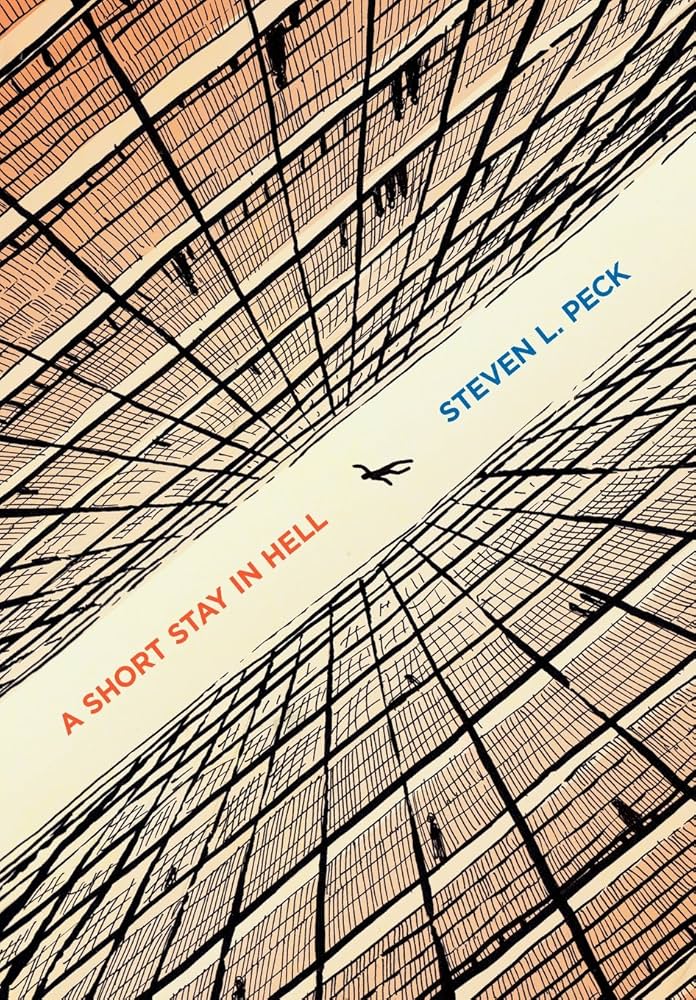
PREMISE: A guy dies and finds himself in Hell. That’s all you’re getting.
I flew through this. And not just because it’s only just over 100 pages long. It’s fantastic and addictively written and definitely makes you think. Not about Hell; personally I’m fairly convinced Hell doesn’t exist and if it does (and therefore Heaven also) then man, did I back the wrong Horse of Life. I’ve got no beef with people who do think they both exist, however. In fact, if Hell is actually waiting for me then I’ll be pretty happy if it’s an infinitely huge library. Even if it does mean I spend eternity looking for American Tabloid.
I’m not dipping into Goodreads for this one but fair to say I’ve had a look and there’s the usual handful of bellends and, staggeringly, a bunch of people who didn’t even finish this. It’s 100 pages! How fucking lazy are some people?
In case you haven’t realised, I’m not an academic book reader / reviewer. I don’t notice if a book is using a particular kind of technique or is espousing some deep shit philosophy or even whether the author’s intention is to make some sort of statement or comment on something. If it’s a well-written book with a good premise and story and – crucially – it entertains me or moves me or makes me think then that’s exactly what I’m looking for in a book. Just like this one.
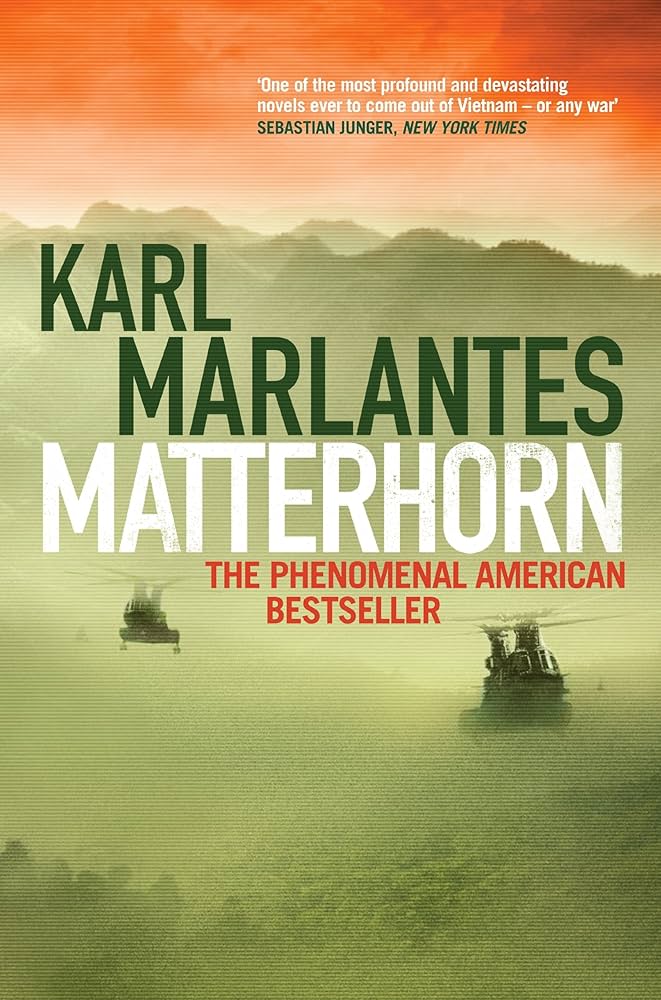
PREMISE: Following a soldier during his time in the Vietnam war.
Yeaaaaaah…I kept that premise short and sweet so we can get to the juicy stuff. Before we visit Goodreads Island, where twats, bellends and utter nob-jockeys live in sweet harmony, let me start by saying this book is amazing. I first read it a fair few years ago and it’s just as good the second time around. Nothing explains what it’s like to be a soldier – and in this case, in a completely pointless and fucked up war – like this. It’s written as a fictional story but it’s essentially true. It’s long and detailed and all-encompassing and addictive and unlike any other book involving conflict that I’ve ever read. Cannot recommend it enough.
And I cannot recommend enough having a browse of the Goodreads 1-starrers for this baby. They really are on another level. And, perhaps more so than any other book I’ve ‘researched’ (hehehe…I laughed at that term too) it exemplifies why the 1-star ratings are absolute horseshit.
As at writing, there are 976 1-star reviews of Matterhorn. Of the first 45 that appeared on my screen, 21 admitted to not having even finished it. Using a complex system of mathematical extrapolation, I make this almost 50% of reviewers who rated this book 1 out of 5 haven’t even finished it. What is the point of them leaving a ‘so-called’ review? It’s not a review as they’ve ultimately nothing to review…because they haven’t read it. Similarly, how can they give a rating to something they haven’t finished? That’s like me baking a cake and someone rating me on how good it is while I’m still in the mixing stage. For some reason that I can’t fathom, it annoys the shit out of me.
And at the same time, I’m glad they choose to write something as I get to ridicule them here. If they’re at liberty to write shit about a book they haven’t even had the decency to finish reading then I’m at liberty to take the piss and call them names. Just like adults should.
I’m starting with the (frankly unbelievable) ‘review’ by Rebecca Curtis, where she admits “I did not actually read this”. Yep, you read that right. WTF? She writes a couple of lines and gives a 1-star rating to a book that she hasn’t even read. RC, you are a moron. Several people commented that they either hate war (who doesn’t?) or hate war books. Or both. Which begs the question, why are they even contemplating reading this then? Sado-masochists of the world unite. Surely they’ll have more fun just flogging themselves or running their genitals over a cheese grater? A couple of people commented on the bad language, like that is the worst thing that Marlantes could have included. Forget the violence, genocide, brutality, utter devastation and the lasting effects that this war – any war, really – has on people…the language that was involved was just too much. It’s okay for soldiers to shoot each other in the face, but absolutely unacceptable to accompany that with a swear word. “Take that, you brute”…”Oooh, you nasty rotter, you shot me in the goolies”…”Excuse me, my good man, why are you hacking my arm off with a machete?”. All of these would have been much more acceptable and, dare I say it, realistic? Come on Marlantes, what the fuck is wrong with you and your potty mouth?
One of my favourites comes from Marco3x (3 times as big a bellend): “This is garbage. The author has watched too many war movies”. Karl Marlantes is a Vietnam veteran. He was there. As opposed to Marco3x, who, judging by his picture, wasn’t. Another was from Mark, who read between 1/3 and 1/2 (two fifths would have worked there Mark) and then “found out it was just going to be another “wow, this war in Vietnam really sucks” book and returned it”. He’s got a point; where are all the positive books that don’t focus on the death and violence but talk about how well the helicopters performed? Or how much money was made by people who had shares in bullet-making companies? Or how many annoying weeds were destroyed by napalm?
Weirdly, the one that has me scratching my head (and simultaneously pulling my hair out) the most is this doozy by Heather Doherty: “I couldn’t read it. War sucks”. I may be wrong on this, but I don’t think Karl Marlantes is to blame for the Vietnam war. And Heather dear, what you’re actually rating with your 1 star is war itself, not this novel. And if this is the case, why are you even giving war 1 star? Surely every war is a no-star affair? And you didn’t even read it. So, what you’ve done is saddled Marlantes with a 1-star rating for a book you didn’t even read because (and rightly so) you think war sucks. How is this the author’s fault? And have you done this for every other fictional war book out there? It seems only fair.
So, once again I’m back to my contradictive point; you shouldn’t be allowed to rate a book you haven’t finished (and certainly not one you haven’t even read!). However, I’m glad that it is allowed, as it gives me blog fodder. Which I shall now refer to as ‘blodder’ and copyright for monetary purposes.
PREMISE: I admit, I generally copy this premise shit from Goodreads. No point me reinventing the wheel. I also do that because it’s a professional summary of the book and something that I wouldn’t be able to get anywhere near in terms of quality. However, I realise that’s such a cop out and in my attempt to produce a professional blog of all my own shite writing and perspectives, I’ve decided to do it all myself. Which basically means if you have even a passing interest in the book I’m talking about, go to Goodreads for a better summary of it because I’ll have likely fucked it up.
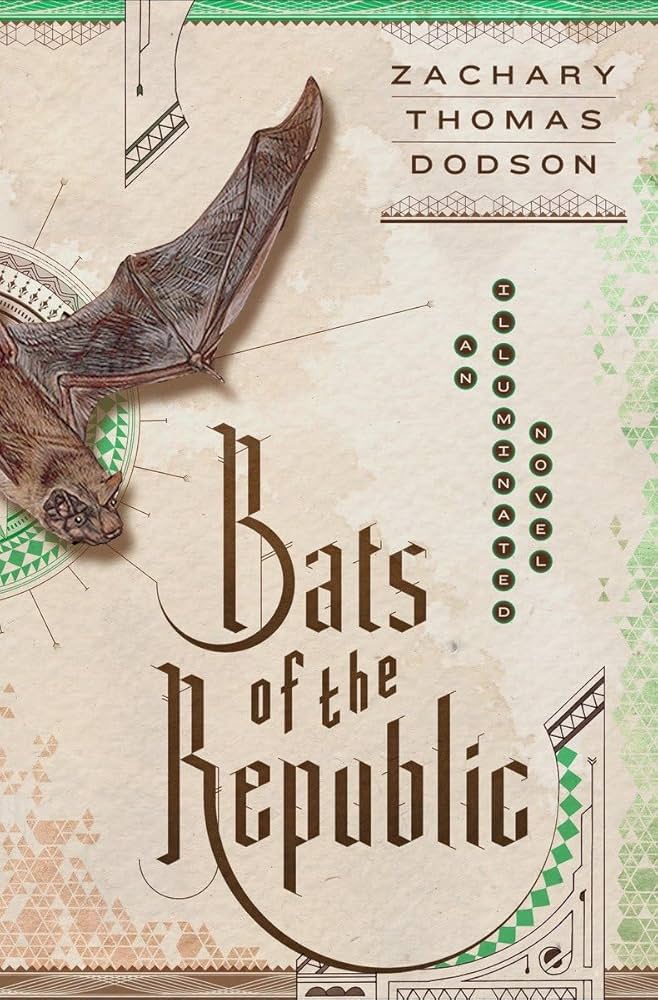
So, this book; two related, converging stories set a few hundred years apart, told using a stunningly clever and gorgeous variety of media (text, pictures, drawings, maps etc.).
I have a dream. That one day my one little daughter will walk into Waterstones or Foyles or Barnes & Noble and not see a Romantasy section full of similar-looking novels with beautifully designed covers and gloriously curly fonts but rather a shelf with the title ‘Original Novels’ and under which sits copies of this book and S and House Of Leaves and Maxwell’s Demon and XX and hopefully a raft of other novels that have some originality about them.
To quote the kids of today, this kind of book is my jam. Particularly when it’s done as well as this. That’s the thing with books like this; there’s so much thought gone into the story, the design, the individual elements to be added, how it all hangs together etc. It becomes a real experience to read. It won’t be for everyone. One man’s Donald Duck is another man’s Donald Trump (aside from the fact that one is a laughably fucking idiotic clown of a cartoon character and the other is a duck).
In fact, this book is everything Trump isn’t; it’s intelligent, eloquent, thoughtful, interesting, fantastic to look at and something that adds to society that we can be grateful for.
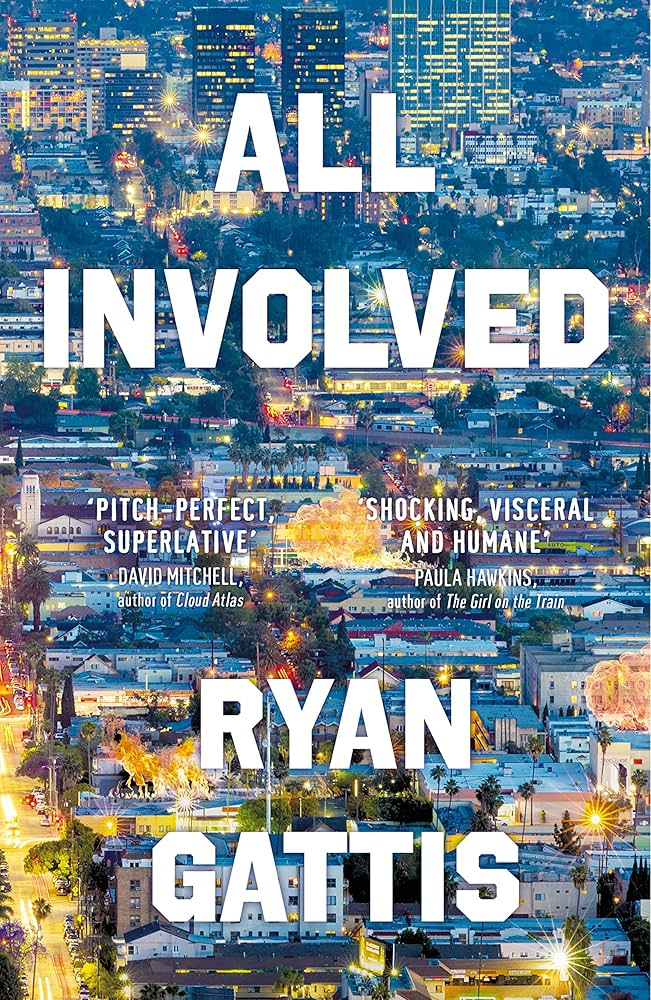
PREMISE: At 3:15 p.m. on April 29, 1992, a jury acquitted three white Los Angeles Police Department officers charged with using excessive force to subdue a black man named Rodney King, and failed to reach a verdict on the same charges involving a fourth officer. Less than two hours later, the city exploded in violence that lasted six days. In nearly 121 hours, fifty-three lives were lost. But there were even more deaths unaccounted for: violence that occurred outside of active rioting sites by those who used the chaos to viciously settle old scores.
All Involved vividly re-creates this turbulent and terrifying time, set in a sliver of Los Angeles largely ignored by the media during the riots. The novel tells seventeen interconnected first-person narratives with characters that capture the voices of gang members, firefighters, graffiti kids, and nurses caught up in these extraordinary circumstances.
Holy shit, I’m learning a lot whilst doing this blog. Today, whilst doing my usual Goodreads look at what others think about this book (I really don’t know whether it can be considered research or whether I’m now genuinely just looking for people to take the piss out of), I learned about ‘#ownvoices’. Now, I’d not heard of this before but Denise let me in on it with this:
“Book has 17 different POV’s. All of them diverse and most of them dark, raw and hideous. It matters that the author is a white male from Colorado. To be fair my reading experience may have been different a couple of years ago. I would have still found it raw, gritty and disturbingly violent, but now I am concerned about #ownvoices”. Which Google AI explained to me means this:
“OwnVoices is a movement that emphasizes the importance of authors writing about stories that align with their own lived experiences and identities, particularly marginalized ones. It highlights the authenticity and credibility of narratives when authors have a personal connection to the characters and issues they represent”.
I’m not going to add anything new or particularly earth-shattering to the actual debate (and whether I agree with it or not is largely irrelevant). However, my issue is with Denise’s comment “my reading experience may have been different a couple of years ago”. Why? Why does it matter who wrote the book? And if we start taking the stance that a book should only be written by someone who has the relevant life experience, then where the fuck does that leave us? Can a white writer not include a black character? Can a straight black writer not write about a gay Asian? Please explain to me what is wrong with someone taking time to learn about a subject in order to write about it? I’m pretty sure Ryan Gattis didn’t just make all this up? His research must have been pretty staggering and I think – in all his books – his characters are so well-rounded and very much real. In fact, if I hadn’t stumbled across ‘#Ownvoices’ I wouldn’t have questioned the authenticity of this book at all.
This book is fantastic and everyone should read it. Which is what I will also say about Safe and The System whenever I get around to adding them here. Ryan Gattis is an awesome writer.
PREMISE: After three years’ hard time, minding no-one’s business but his own, Ray Klein wins his parole and chances his hand at a romance with prison psychiatrist Juliette Devlin. That same day, tribal war erupts and the prison – and its infirmary – falls into the hands of its inmates. Klein must choose either to claim his freedom and leave the ones he cares for to die, or risk everything and fight.
I’m not entirely sure when I read this so I’m going to assume it was the year it came out, 1994. Man, 1994…the year of the first Playstation and the year Kurt Cobain died. The first U.K. National Lottery was this year too, and having wasted more money only last night on trying to bag the £200m Euromillions, my lottery luck hasn’t changed at all since 1994. I swear it’s rigged.
On the book front, Nelson Mandela’s Long Walk To Freedom was published along with – more significantly, for me anyway – Volume 1 of Mike Mignola’s Hellboy. An utter classic. Other books published that year: Cormac McCarthy’s The Crossing, Tom Clancy’s Debt of Honor and Denis Lehane’s A Drink Before The War, which I actually read last year and loved. If you ask Goodreads to show you the top 200 books of 1994, Green River Rising isn’t on the list. And this is a list that has (albeit scraping in at number 196) a book entitled “When God Writes Your Love Story: The Ultimate Approach to Guy/Girl Relationships”. A book that I ought never read for fear of breaking my promise to keep this blog negative-free.
My point (if I even have one) is that Green River Rising, for me, was one of the best things of 1994 and although I haven’t read it since (I’m hoping to very soon) I’d imagine it will still be one of the best things of any year. A great book.
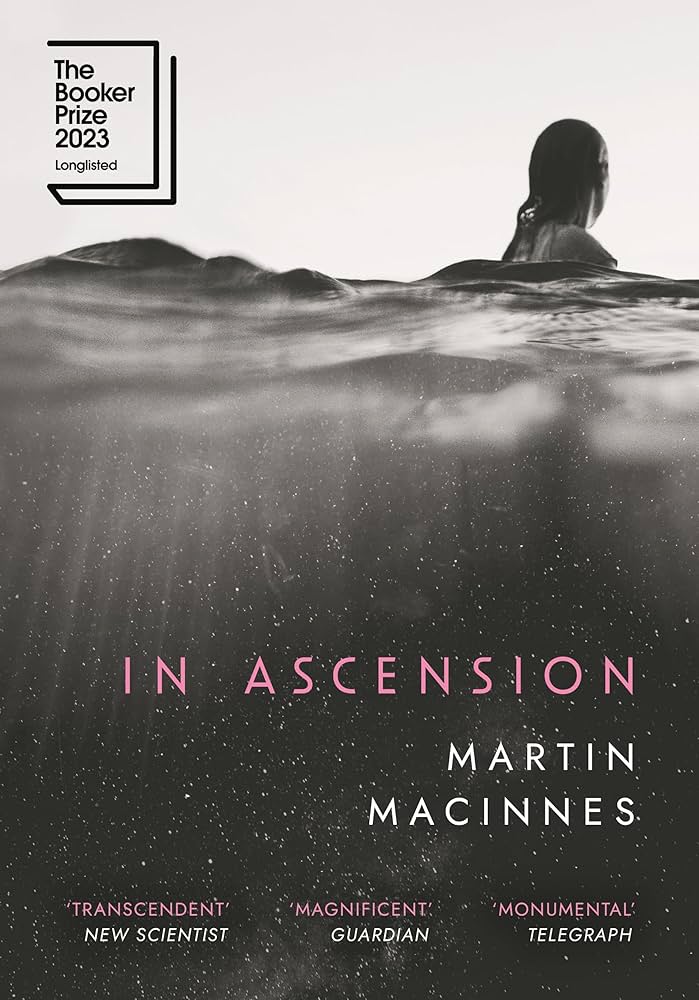
PREMISE: Leigh grew up in Rotterdam, drawn to the waterfront as an escape from her unhappy home life and volatile father. Enchanted by the undersea world of her childhood, she excels in marine biology, travelling the globe to study ancient organisms. When a trench is discovered in the Atlantic ocean, Leigh joins the exploration team, hoping to find evidence of the earth’s first life forms – what she instead finds calls into question everything we know about our own beginnings.
Her discovery leads Leigh to the Mojave desert and an ambitious new space agency. Drawn deeper into the agency’s work, she learns that the Atlantic trench is only one of several related phenomena from across the world, each piece linking up to suggest a pattern beyond human understanding. Leigh knows that to continue working with the agency will mean leaving behind her declining mother and her younger sister, and faces an impossible choice: to remain with her family, or to embark on a journey across the breadth of the cosmos.
You ever read a book where every word feels important? Not just well thought out or well written, but actually critical to the story in a way that kind of carries a gargantuan weight. That’s what Martin MacInnes does. Across all three books he’s written he has a way of writing that is not just addictive in terms of the prose and the beauty of reading but somehow it’s as if every single word is of vital significance.
Unlike me, as I clearly can’t even explain why I like something. Good job I don’t do this book review (not that these are reviews) shit for a living. I’d have been sacked long ago.
I loved MacInnes’ first two books but this felt like a real step up and I think of it within a bracket of books I’ve read that have something cerebral, wondrous and magical about them. Very much looking forward to book no.4.
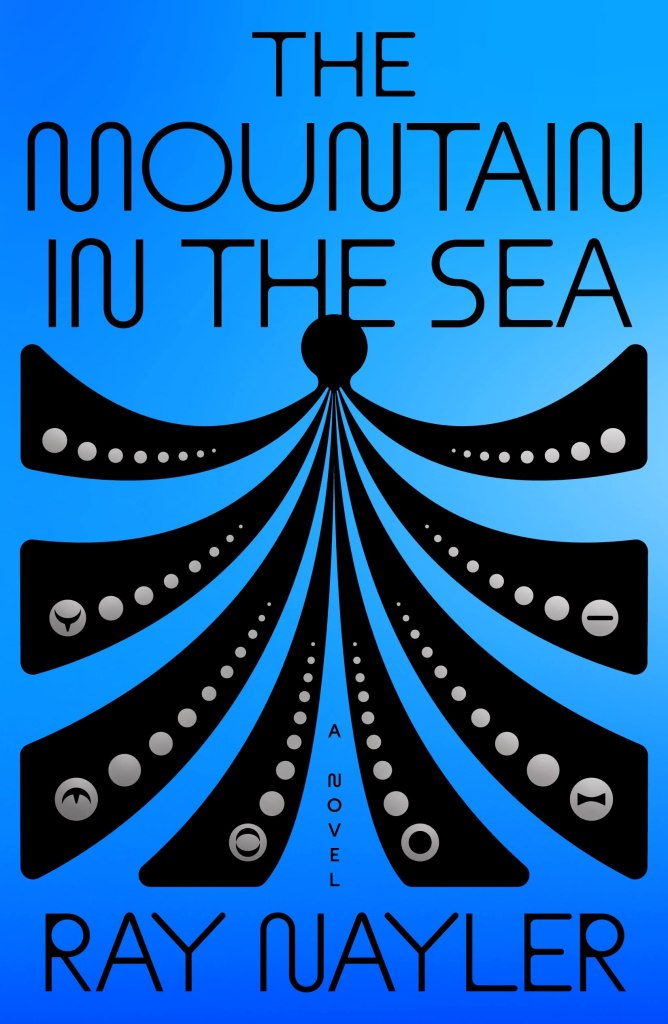
PREMISE: Rumors begin to spread of a species of hyperintelligent, dangerous octopus that may have developed its own language and culture. Marine biologist Dr. Ha Nguyen, who has spent her life researching cephalopod intelligence, will do anything for the chance to study them.
The transnational tech corporation DIANIMA has sealed the remote Con Dao Archipelago, where the octopuses were discovered, off from the world. Dr. Nguyen joins DIANIMA’s team on the islands: a battle-scarred security agent and the world’s first android.
The octopuses hold the key to unprecedented breakthroughs in extrahuman intelligence. The stakes are high: there are vast fortunes to be made by whoever can take advantage of the octopuses’ advancements, and as Dr. Nguyen struggles to communicate with the newly discovered species, forces larger than DIANIMA close in to seize the octopuses for themselves.
But no one has yet asked the octopuses what they think. And what they might do about it.
My 20-year old self was a bit of a twat. In fact, probably anything from 10 or 11 onwards up until well into my thirties (some may argue a lot later) I would proffer I was a bit of a dick. Not that I exactly have life figured out now – absolutely far from it – but aside from my daughter, a few life events and time spent with my now-fiancee, there’s no rose-tinted spectacles when I reminisce. And that extended to my reading habits. I was very narrow-minded in terms of stuff I’d read. Unlike now where I actively search out new authors and stories and love finding something different, back then I’d read the same sort of thing by the same sort of authors. I reckon if someone had read the above premise to me and suggested I read it I’d have rolled around laughing. Like I said, bit of a twat.
So, whilst I’m sure I have a lot of twat left in me, I like to think I’ve broadened a few things in terms of my reading and that’s allowed me to find beauties like The Mountain in the Sea. In many ways, it reminded me of a Richard Powers book; intelligent, thought-provoking, fantastic ideas, so massively enjoyable. I’m not the sharpest tool in the box so any book where I’m learning while I’m enjoying a story is a literary perfect storm to me.
PREMISE: It’s 1962 and physics student Grace Pulansky believes she has met the man of her dreams, Robert Jones, while serving up slices of pecan pie at the local diner. But then the FBI shows up, with their fedoras and off-the-rack business suits, and accuses him of being a bomb-planting mass-murderer.
Finding herself on the run with Jones across America’s Southwest, the discoveries awaiting Gracie will undermine everything she knows about the universe.
Her story will reveal how scores of lives – an identity-swapping rock star, a mourning lover in ancient China, Nazi hunters in pursuit of a terrible secret, a crazed artist in pre-revolutionary France, an astronaut struggling with a turbulent interplanetary future, and many more – are interconnected across space and time by love, grief, and quantum entanglement.
Yeah, I know…what a premise. That’s exactly what I thought. Man, when I stumble across books like this on Goodreads or Amazon I swear a little bit of ‘man wee’ leaks out. This is my reading sweet spot, my narrative nirvana. I love stories with multiple strands, narrators, viewpoints etc that all come together (and sometimes don’t) at the end. And this one is an absolute beauty. His first novel, I believe (I should really research and confirm that but that sounds like something a more professional blogger would do) and hopefully the first of many. It’s such a fantastic book.
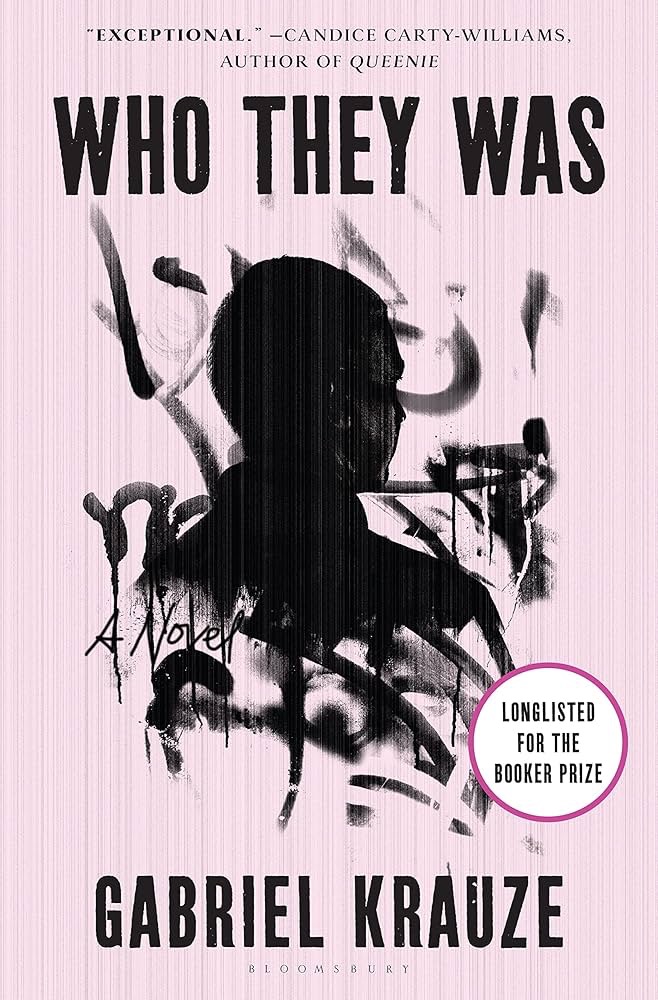
PREMISE: The unforgettable narrator of this compelling, thought-provoking debut goes by two names in his two worlds. At the university he attends, he’s Gabriel, a seemingly ordinary, partying student learning about morality at a distance. But in his life outside the classroom, he’s Snoopz, a hard living member of London’s gangs, well-acquainted with drugs, guns, stabbings, and robbery. Navigating these sides of himself, dealing with loving parents at the same time as treacherous, endangering friends and the looming threat of prison, he is forced to come to terms with who he really is and the life he’s chosen for himself.
I’m really trying NOT to use Goodreads as the basis for each book post I do, but I was really curious about the 1-starrers on this one. Or, more accurately, I was keen for Goodreads to reaffirm my view that there’s some complete nobjockeys out there. And it didn’t let me down.
Caroline’s review starts with the startling admission that she “doesn’t like books about violence and drugs” and that she “isn’t the target audience”. Why the fuck are you reading it then Caroline? Is your junkie mobster husband forcing you to? Just think of the physical and emotional effort Caroline went through to read a book she knew she would hate just so she could then tell everyone how much she hated it. Some people just don’t help themselves.
Deborah stated “One of the least enjoyable books I think I’ve ever ploughed my way through (on audio)”. On audio? What the shit? You could have pushed the stop button at any time Deborah. That’s masochism for the digital age. And just fucking stupid.
I’ve picked on Caroline and Deborah there but there’s really three types of people who irritate me and why I think ultimately that book reviews are pointless:
The people who did not finish the book but still rate it. One guy rated it 1 star and didn’t even finish the first chapter.
The people who ‘struggle through’ the book just so they can bitch about it in a review.
People who do either of the above and then tell people not to bother reading it.
And it’s this third bit that really gives me the shits. My intention with this blog is to talk about books that I’ve really enjoyed and that I think others will too. There’s millions of stories and authors out there and finding new ones based on other’s recommendations is one of the joys of reading. I’ve read books that were ultimately disappointing but I’d never suggest that others don’t read them. There’s an American Tabloid (or Who They Was) out there for everyone. One man’s Oscar Wilde is another man’s Oscar Pistorius. Something for those negative nonces to think about; why not expend energy on writing something positive about something you enjoyed? We can all easily find a stack of books that aren’t for us…the ones that really hit our sweet spots are usually harder to come across.
<Jumps off his high horse> Right, sorry about that. I may have digressed. I really enjoyed this book, probably due to its subject matter and the fact that it’s a difficult and divisive subject to discuss. I thought it was intelligent, engaging and well-written. But hey, that’s just me. I think Caroline and Deborah disagree.
PREMISE: Harry August is on his deathbed. Again. No matter what he does or the decisions he makes, when death comes, Harry always returns to where he began, a child with all the knowledge of a life he has already lived a dozen times before. Nothing ever changes. Until now. As Harry nears the end of his eleventh life, a little girl appears at his bedside. “I nearly missed you, Doctor August,” she says. “I need to send a message.” This is the story of what Harry does next, and what he did before, and how he tries to save a past he cannot change and a future he cannot allow.
Claire North is a genius in my eyes. Not only is she a fantastic writer and storyteller but she comes up with just the best story ideas; a man who lives multiple lives, a person who can move between bodies just by touching them, a girl who nobody can remember, the Harbinger of Death. She also has such a ‘smooth’ way of writing, which I realise is just a fancy way of saying that she’s a really good writer. I mentioned it in a previous post; some writers words you can just swallow like soup whereas others might contain a few small croutons or large chunks of Ryvita. Ultimately tasty but might take a bit of work to get there. Claire North to me is the Heinz Oxtail of writers. Gloriously good.


 Portable Wonderland