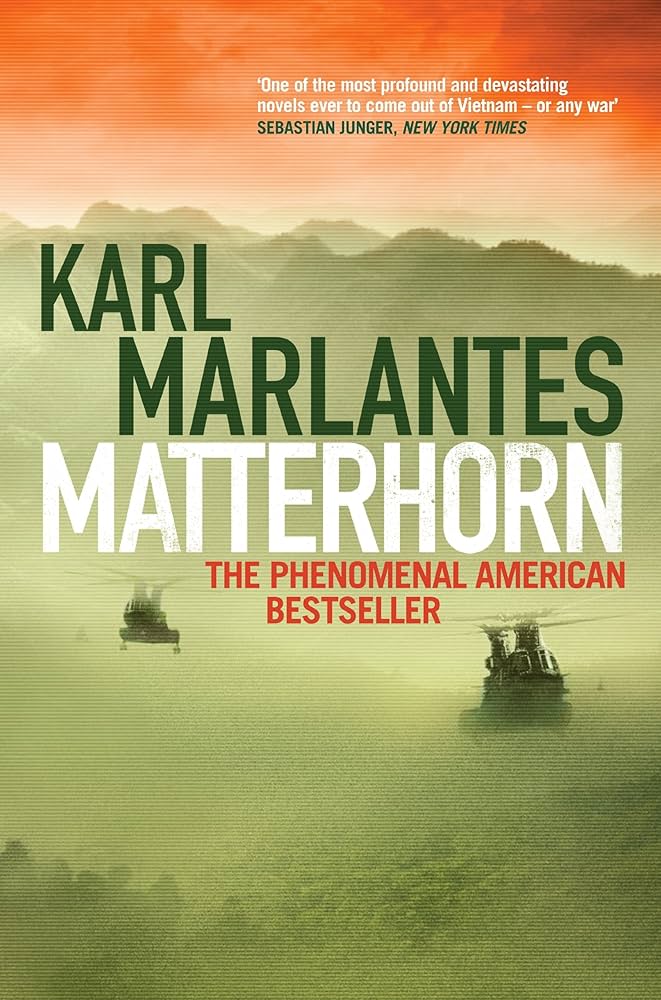
Matterhorn by Karl Marlantes

Yeaaaaaah…I kept that premise short and sweet so we can get to the juicy stuff. Before we visit Goodreads Island, where twats, bellends and utter nob-jockeys live in sweet harmony, let me start by saying this book is amazing. I first read it a fair few years ago and it’s just as good the second time around. Nothing explains what it’s like to be a soldier – and in this case, in a completely pointless and fucked up war – like this. It’s written as a fictional story but it’s essentially true. It’s long and detailed and all-encompassing and addictive and unlike any other book involving conflict that I’ve ever read. Cannot recommend it enough.

And I cannot recommend enough having a browse of the Goodreads 1-starrers for this baby. They really are on another level. And, perhaps more so than any other book I’ve ‘researched’ (hehehe…I laughed at that term too) it exemplifies why the 1-star ratings are absolute horseshit.

As at writing, there are 976 1-star reviews of Matterhorn. Of the first 45 that appeared on my screen, 21 admitted to not having even finished it. Using a complex system of mathematical extrapolation, I make this almost 50% of reviewers who rated this book 1 out of 5 haven’t even finished it. What is the point of them leaving a ‘so-called’ review? It’s not a review as they’ve ultimately nothing to review…because they haven’t read it. Similarly, how can they give a rating to something they haven’t finished? That’s like me baking a cake and someone rating me on how good it is while I’m still in the mixing stage. For some reason that I can’t fathom, it annoys the shit out of me.

And at the same time, I’m glad they choose to write something as I get to ridicule them here. If they’re at liberty to write shit about a book they haven’t even had the decency to finish reading then I’m at liberty to take the piss and call them names. Just like adults should.

I’m starting with the (frankly unbelievable) ‘review’ by Rebecca Curtis, where she admits “I did not actually read this”. Yep, you read that right. WTF? She writes a couple of lines and gives a 1-star rating to a book that she hasn’t even read. RC, you are a moron. Several people commented that they either hate war (who doesn’t?) or hate war books. Or both. Which begs the question, why are they even contemplating reading this then? Sado-masochists of the world unite. Surely they’ll have more fun just flogging themselves or running their genitals over a cheese grater? A couple of people commented on the bad language, like that is the worst thing that Marlantes could have included. Forget the violence, genocide, brutality, utter devastation and the lasting effects that this war – any war, really – has on people…the language that was involved was just too much. It’s okay for soldiers to shoot each other in the face, but absolutely unacceptable to accompany that with a swear word. “Take that, you brute”…”Oooh, you nasty rotter, you shot me in the goolies”…”Excuse me, my good man, why are you hacking my arm off with a machete?”. All of these would have been much more acceptable and, dare I say it, realistic? Come on Marlantes, what the fuck is wrong with you and your potty mouth?

One of my favourites comes from Marco3x (3 times as big a bellend): “This is garbage. The author has watched too many war movies”. Karl Marlantes is a Vietnam veteran. He was there. As opposed to Marco3x, who, judging by his picture, wasn’t. Another was from Mark, who read between 1/3 and 1/2 (two fifths would have worked there Mark) and then “found out it was just going to be another “wow, this war in Vietnam really sucks” book and returned it”. He’s got a point; where are all the positive books that don’t focus on the death and violence but talk about how well the helicopters performed. Or how much money was made by people who had shares in bullet-making companies? Or how many annoying weeds were destroyed by napalm?

Weirdly, the one that has me scratching my head (and simultaneously pulling my hair out) the most is this doozy by Heather Doherty: “I couldn’t read it. War sucks”. I may be wrong on this, but I don’t think Karl Marlantes is to blame for the Vietnam war. And Heather dear, what you’re actually rating with your 1 star is war itself, not this novel. And if this is the case, why are you even giving war 1 star? Surely every war is a no-star affair? And you didn’t even read it. So, what you’ve done is saddled Marlantes with a 1-star rating for a book you didn’t even read because (and rightly so) you think war sucks. How is this the author’s fault? And have you done this for every other fictional war book out there? It seems only fair.

So, once again I’m back to my contradictive point; you shouldn’t be allowed to rate a book you haven’t finished (and certainly not one you haven’t even read!). However, I’m glad that it is allowed, as it gives me blog fodder. Which I shall now refer to as ‘blodder’ and copyright for monetary purposes.
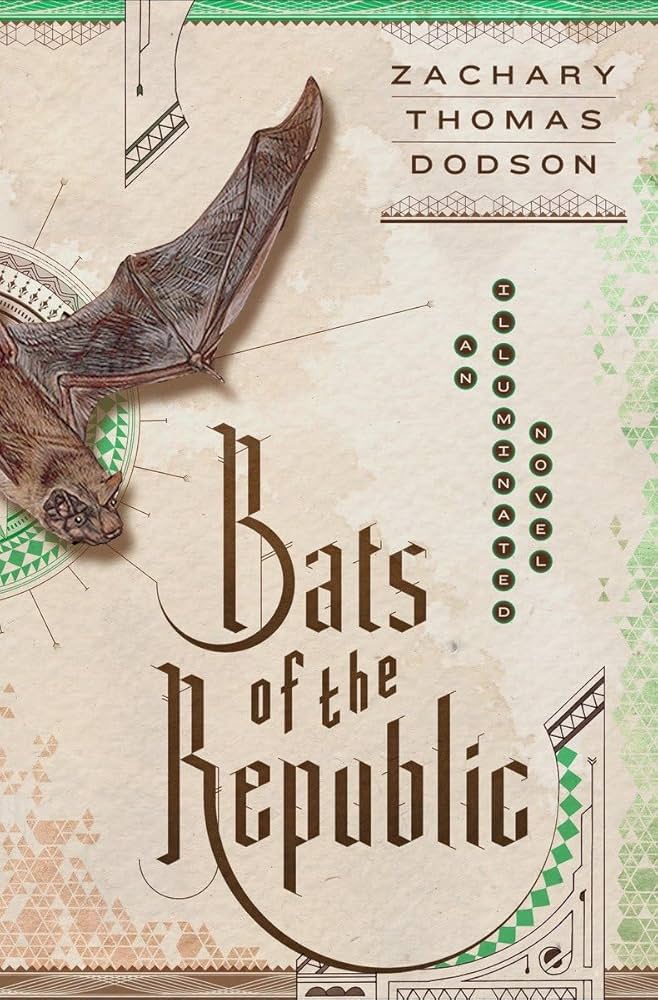
Bats Of The Republic by Zachary Thomas Dodson

I have a dream. That one day my one little daughter will walk into Waterstones or Foyles or Barnes & Noble and not see a Romantasy section full of similar-looking novels with beautifully designed covers and gloriously curly fonts but rather a shelf with the title ‘Original Novels’ and under which sits copies of this book and S and House Of Leaves and Maxwell’s Demon and XX and hopefully a raft of other novels that have some originality about them.

To quote the kids of today, this kind of book is my jam. Particularly when it’s done as well as this. That’s the thing with books like this; there’s so much thought gone into the story, the design, the individual elements to be added, how it all hangs together etc. It becomes a real experience to read. It won’t be for everyone. One man’s Donald Duck is another man’s Donald Trump (aside from the fact that one is a laughably fucking idiotic clown of a cartoon character and the other is a duck).

In fact, this book is everything Trump isn’t; it’s intelligent, eloquent, thoughtful, interesting, fantastic to look at and something that adds to society that we can be grateful for.

Tom’s Crossing by Mark Z. Danielewski

That’s it. That’s all I’m putting. Well, that probably won’t be true by the time I’ve finished writing this bit. I never plan that far ahead. In fact this very sentence I’m writing now I had no idea at all five minutes ago that I’d be writing it. Although I guess I’ve just summed up the very action of writing. I wonder if Mark Z. Danielewski (MZD from now on) writes that way or whether he knows exactly what each line, sentence and paragraph is going to say. Because man, can he write. And this novel is 1200 pages long and – perhaps strangely for MZD, based on his previous books – aside from one page, this is all solid, full-page writing, so he’s written a lot.

More than any other book I’ve written about on this blog, this is the most difficult to fully elucidate why I recommend it, without spoilers. And without contradicting myself at every turn. Because it’s fair to say that this won’t be for everyone. It’s painfully slow paced, but in a good way. Like the pain you get when you’re having a tattoo done. Oddly addictive. It’s self-indulgent in places but so intelligently well-written that that self-indulgence is so enjoyable. It’s frustrating in a few places too when the story goes off on a tangent that changes the pace somewhat, but you end up just being excited as to where it’s now going. This is a story that most writers would have told in 200 pages. Or 400 pages with a bit of padding. Or 600 pages with a shed load of backstories, plus extra padding. Or 800 pages with a shed load of backstories, extra padding plus a couple hundred pages of inane rambling. Or 1000 pages with all of the above plus pictures every 4 pages. That MZD has told this story over 1200 pages and yet still made it so unbelievably readable is some sort of miracle.

You know what I think this book is? It’s a book that contains a story which you read because you love writing. Or the form of writing, the art involved, the actual act and skill of creating a story, a novel and a book. There’s essentially nothing unique or different about the story itself; it’s all about how the story is told and how, as a reader, you approach and enjoy how it is being told. That’s the bit that I recommend.

In my usual way, I’m going to finish by referencing a Goodreads review – just the one as it’s pretty breathtaking in it’s level of utter dumbfuckery. It’s posted by Roy, who hasn’t included a picture of himself as it’s more than likely he’s got multiple facial features more than the rest of us as a result of decades of familial inbreeding. Here’s a couple of lines from the Royster:

“Every female character is intelligent and flawless, with most of them insufferable with their attitudes towards the male characters, who are all eventually portrayed as pathetic, cowardly and/or terrible father figures. It’s nauseating to see in modern media that the only way female characters can be strong is by putting down and insulting white male characters. The only male character that doesn’t suffer from this is the effeminately written character of Kalin.”

Yep, Roy’s gone the misogynistic, racist route. And incorrect as well. Every female character is not flawless (did you even read the scenes with Allison and Sondra? I’m assuming not as you got one of their names wrong) and quite how you’ve read MZD’s portrayal of Kalin as effeminate I’ve no idea. I’d like to see you do what Kalin did in this story. Still, I’m too mature than to poke fun at a stranger this way so I’ll just finish by saying that Roy is clearly an old white guy with a small willy.

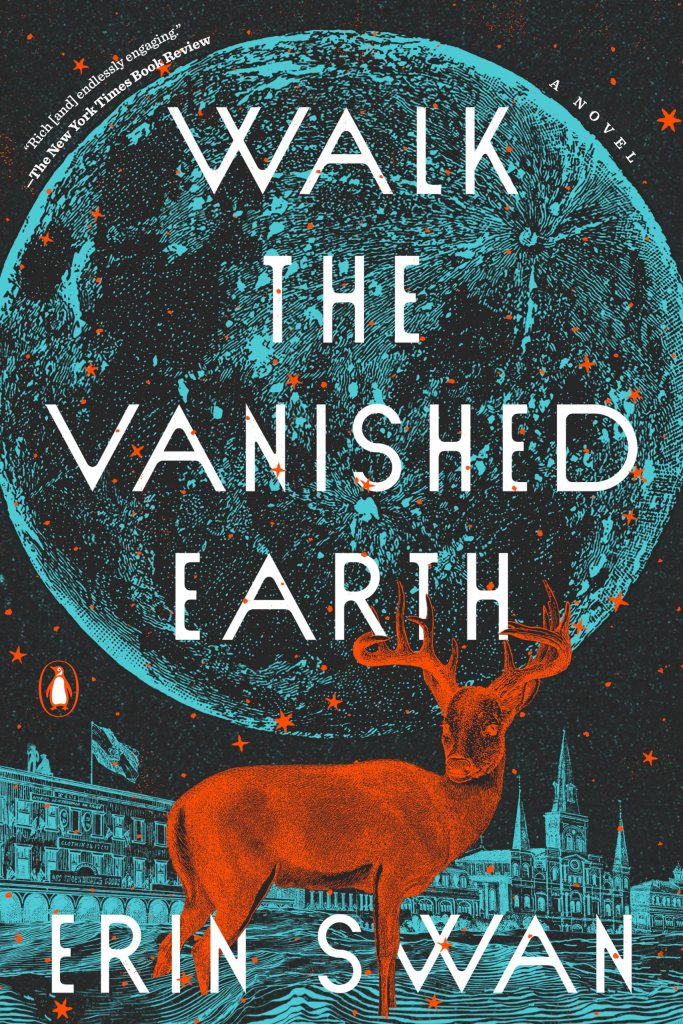
Walk The Vanished Earth by Erin Swan

I absolutely loved this book. So much so, that it’s made it into my Hall of Fame. But before I get to why and spurt a load of superlatives to back it up, let’s hold hands and have a quick skip through the Goodreads 1-starrers’ garden. Some corkers for this one:

Torza couldn’t be arsed to finish the book but wanted to add a one-star review anyway, and said, “didnt finish it. idk, maybe it was good, but the multiple child pregnancies was kinda putting me off.” There was one and it was fairly important to the plot. Colleen Carroll (4 lots of double letters in that name…lazy-ass parents…there’s plenty of other letters out there) continued with the ‘let’s make up some bullshit about this book’ by referencing the “obvious/probable forced alien impregnation of a 14 year old”, which didn’t happen. At all. Anywhere in the book. Two reviewers mentioned the term ‘TERF’, suggesting that the author, Erin Swan has an issue with transgender people. Where the fuck they got this from I’ve no idea as there are no transgender characters in the book. Unless that was their problem, in which case they can fuck right off. Why does every author who doesn’t include a trans character get accused of being anti-transgender? For fuck sake.

My favourite review, however, was this baby by Coastalshelf (obviously has an even more embarrassing name than my middle one): “Found the focus on women as vessels for childbirth extremely off-putting”. Ho-lee-shit. This is a book that spreads across centuries and features characters that are related to each other. The only way for that to happen is for women to give birth. That’s not my opinion, that’s just a fact. You know, Coastalshelf, like your mother did to bring you into the world. Women ARE vessels for childbirth, thankfully. Otherwise none of us would be here. Coastalshelf, you’re a fucking moron.

This book is staggeringly good. Absolutely beautifully written, a complex, inter-weaving story with a gargantuan scope. And this is the author’s first book. Mind-blowing…

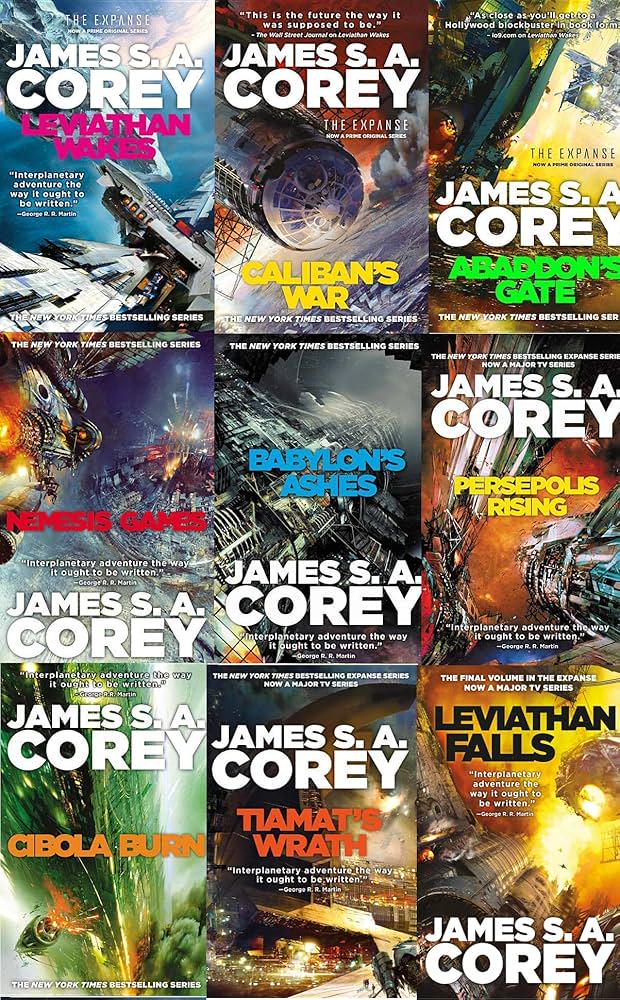
The Expanse series by James S.A. Corey

Man, I love sci-fi. And yet, relatively speaking, I hardly read any at all. It’s a strange paradox which could easily be dramatised in a sci-fi book or film. The Sci-fi Paradox, it shall be called. One man, alone in the blogging universe with only a handful of readers to hear him, wants to read more sci-fi books but never does, and he just can’t figure out why. It’s got instant bestseller written all over it.

I’ve read some Peter Hamilton and quite a few Iain M Banks and a few other sci-fi books here and there but nothing has comes close to The Expanse books for me. They are pitched absolutely perfectly in terms of story and characters and then all the spacey tech stuff to keep the geeks happy. The good guys and gals are all so likeable, the bad ones absolute bellends. There’s alieny creatures and gore, fast spaceships with big guns, interesting and colourful and dangerous worlds and mind-blowing extraterrestrial entities. These books literally have everything and – most importantly – have a cracking story that runs through all 9 books and within the novellas and finishes just as good as it started.

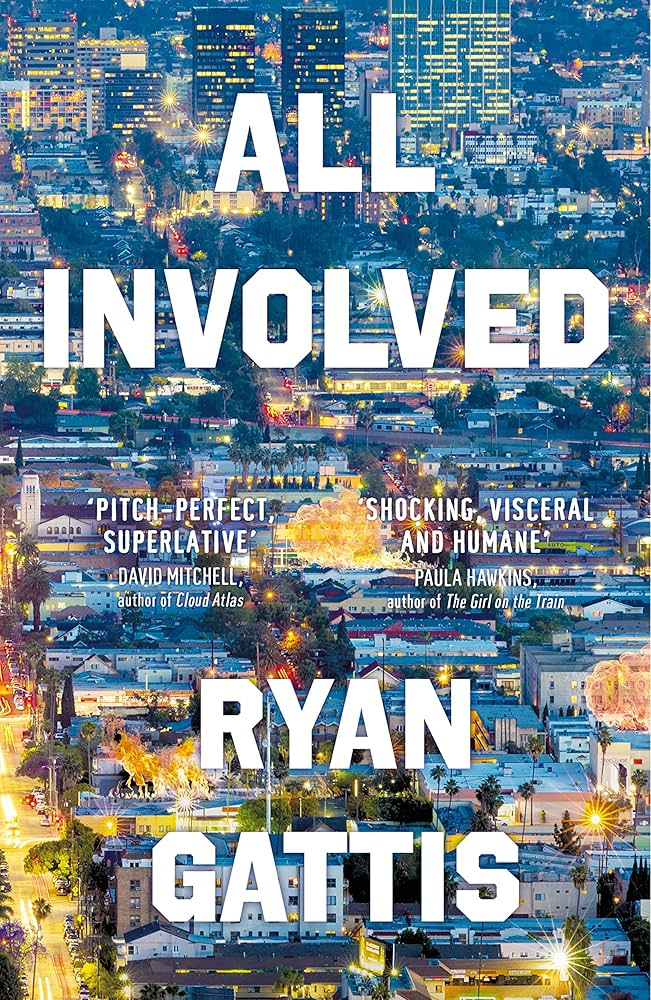
All Involved by Ryan Gattis

Holy shit, I’m learning a lot whilst doing this blog. Today, whilst doing my usual Goodreads look at what others think about this book (I really don’t know whether it can be considered research or whether I’m now genuinely just looking for people to take the piss out of), I learned about ‘#ownvoices’. Now, I’d not heard of this before but Denise let me in on it with this:

“Book has 17 different POV’s. All of them diverse and most of them dark, raw and hideous. It matters that the author is a white male from Colorado. To be fair my reading experience may have been different a couple of years ago. I would have still found it raw, gritty and disturbingly violent, but now I am concerned about #ownvoices”. Which Google AI explained to me means this:

“OwnVoices is a movement that emphasizes the importance of authors writing about stories that align with their own lived experiences and identities, particularly marginalized ones. It highlights the authenticity and credibility of narratives when authors have a personal connection to the characters and issues they represent”.

I’m not going to add anything new or particularly earth-shattering to the actual debate (and whether I agree with it or not is largely irrelevant). However, my issue is with Denise’s comment “my reading experience may have been different a couple of years ago”. Why? Why does it matter who wrote the book? And if we start taking the stance that a book should only be written by someone who has the relevant life experience, then where the fuck does that leave us? Can a white writer not include a black character? Can a straight black writer not write about a gay Asian? Please explain to me what is wrong with someone taking time to learn about a subject in order to write about it? I’m pretty sure Ryan Gattis didn’t just make all this up? His research must have been pretty staggering and I think – in all his books – his characters are so well-rounded and very much real. In fact, if I hadn’t stumbled across ‘#Ownvoices’ I wouldn’t have questioned the authenticity of this book at all.

This book is fantastic and everyone should read it. Which is what I will also say about Safe and The System whenever I get around to adding them here. Ryan Gattis is an awesome writer.

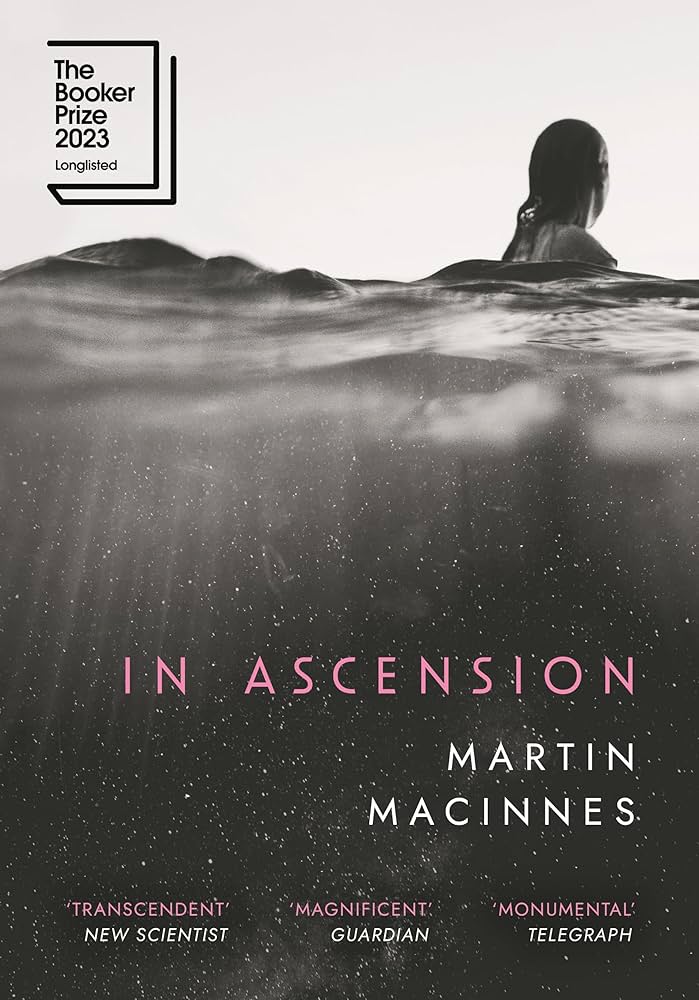
In Ascension by Martin MacInnes

You ever read a book where every word feels important? Not just well thought out or well written, but actually critical to the story in a way that kind of carries a gargantuan weight. That’s what Martin MacInnes does. Across all three books he’s written he has a way of writing that is not just addictive in terms of the prose and the beauty of reading but somehow it’s as if every single word is of vital significance.

Unlike me, as I clearly can’t even explain why I like something. Good job I don’t do this book review (not that these are reviews) shit for a living. I’d have been sacked long ago.

I loved MacInnes’ first two books but this felt like a real step up and I think of it within a bracket of books I’ve read that have something cerebral, wondrous and magical about them. Very much looking forward to book no.4.

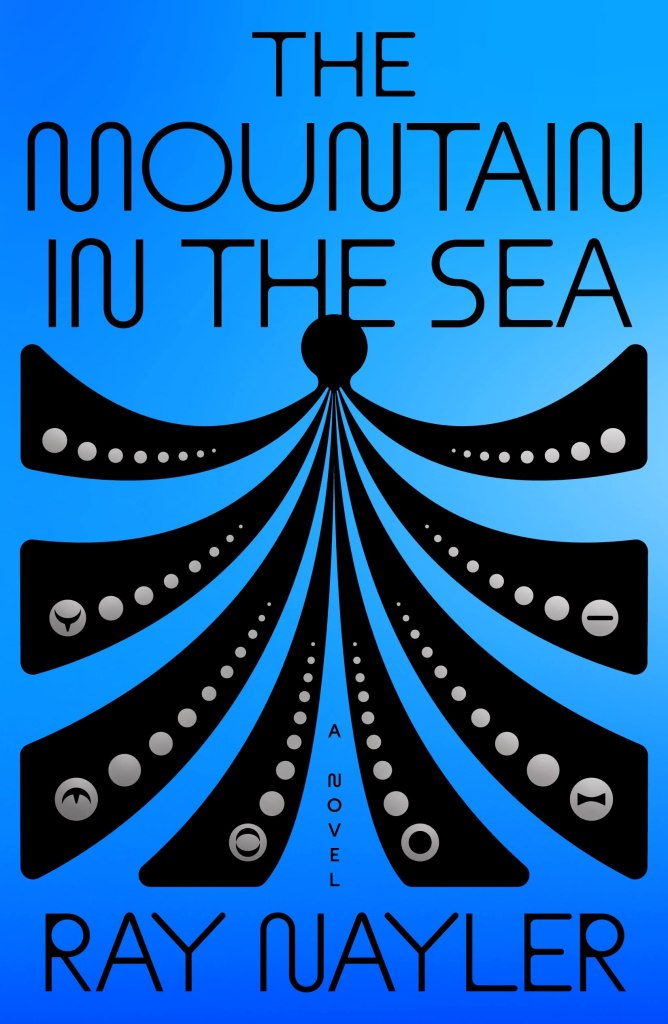
The Mountain in the Sea by Ray Nayler

My 20-year old self was a bit of a twat. In fact, probably anything from 10 or 11 onwards up until well into my thirties (some may argue a lot later) I would proffer I was a bit of a dick. Not that I exactly have life figured out now – absolutely far from it – but aside from my daughter, a few life events and time spent with my now-fiancee, there’s no rose-tinted spectacles when I reminisce. And that extended to my reading habits. I was very narrow-minded in terms of stuff I’d read. Unlike now where I actively search out new authors and stories and love finding something different, back then I’d read the same sort of thing by the same sort of authors. I reckon if someone had read the above premise to me and suggested I read it I’d have rolled around laughing. Like I said, bit of a twat.

So, whilst I’m sure I have a lot of twat left in me, I like to think I’ve broadened a few things in terms of my reading and that’s allowed me to find beauties like The Mountain in the Sea. In many ways, it reminded me of a Richard Powers book; intelligent, thought-provoking, fantastic ideas, so massively enjoyable. I’m not the sharpest tool in the box so any book where I’m learning while I’m enjoying a story is a literary perfect storm to me.

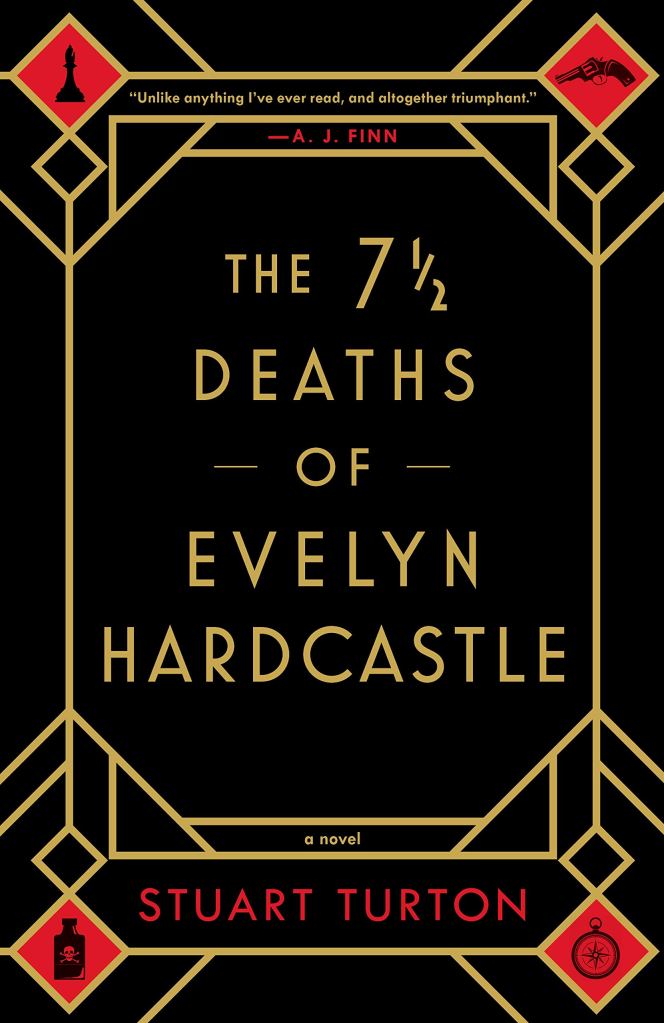
The 7 ½ Deaths of Evelyn Hardcastle by Stuart Turton

Here’s another one. Another book with such a great premise that you wished you’d thought of it yourself. It’s kind of like Groundhog Day meets Quantum Leap meets Freaky Friday meets Miss Marple. What a film that would be. And what a book this is. I read somewhere that it took Stuart Turton three months to plan out the book on a huge spreadsheet where he detailed every two minutes of every character’s day and their location in the house at each point and when you read the book you can easily understand why he needed to do this.

This is literally a book to get lost in; a book that needs 100% of your attention every time you pick it up as the term ‘labyrinthine plotting’ doesn’t even begin to describe it. The real genius, however, is that Mr. Turton pulls it off with aplomb. Absolutely perfect reading escapism.

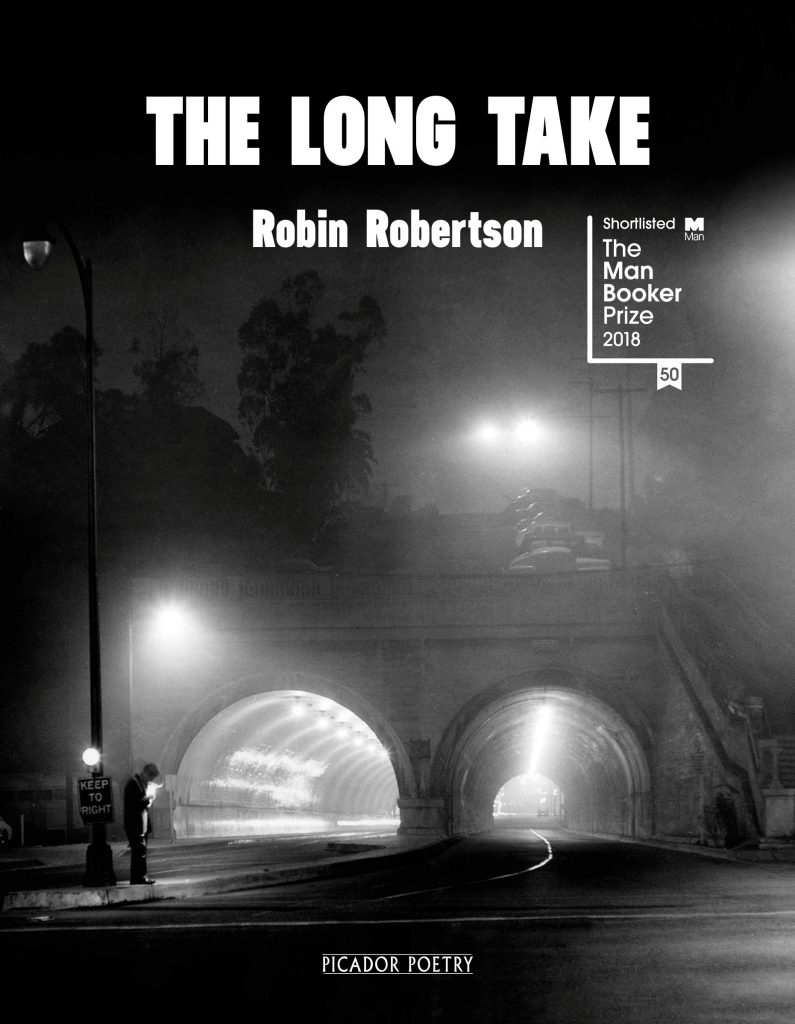
The Long Take by Robin Robertson

I have a thing for poetry, albeit an annoyingly fleeting one that comes and goes every few years. For example, around five years ago I decided to start a poetry blog containing a few poems I’d written and was writing at the time for no reason whatsoever. So I did this – https://davegoldingpoetry.wordpress.com/ – and have done nothing more with it since. A true artist…

Similarly, I haven’t read any poetry since reading this book and now I’m talking about it here I can’t understand why I don’t do more of both. There’s something pretty magical about stories being told through poetry and The Long take is a fantastic example of that. Note to self (which I hope to remember and do a lot more with than my poetry blog): find more of this stuff out there and enjoy.